Industrial vacuum reducers and reducer couplings are used to connect piping and tubing sections with different diameters in central vacuum, dust collection, and pneumatic conveying systems. Proper sizing helps maintain efficient airflow, minimize unnecessary pressure loss, and provide smoother transitions between tubing sizes.
Vacuum reducers provide a transition between different pipe or tubing diameters, while reducer couplings connect compatible tubing or fittings of different sizes. Selecting the correct component depends on outside diameter, material, wall thickness, connection method, and the type of dust or material being conveyed.
Industrial vacuum reducers and reducer couplings are commonly used in manufacturing, woodworking, material handling, industrial cleaning, and process applications where multiple tubing sizes must be connected within the same piping system.
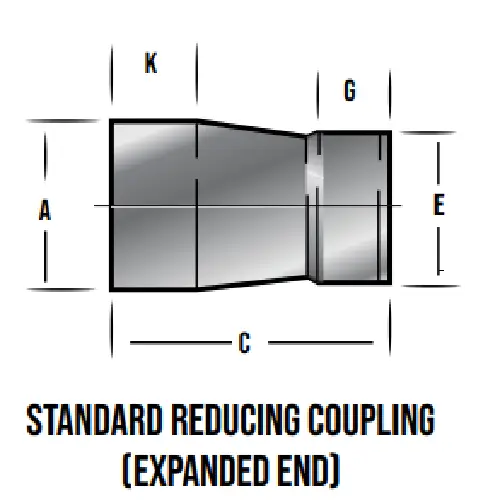
Reducing Coupling Schematic
2-1/8″Ø to 4″Ø – 16 Ga
5″Ø to 8″Ø – 14 Ga
10″Ø to 14″Ø – 12 Ga
All dimensions (inches)
Vacuum Reducing Couplings Available in:
Carbon Steel, Galvanized Steel, Aluminum 6061, 304 SS
Small end expanded is standard on reducers.
Straight Ends available on all reducers. Attach an S to the end of the reducers part number.
D 1 1/4 thru 4″ Ø, 1 1/2″ for 5″Ø & 6″Ø
| Part No. | Size | A | E | C | K |
|---|---|---|---|---|---|
| RC-212 | 2-1/8 x 2 | 2-1/8 | 2 | 4 | 2 |
| RC-254 | 2-1/2 x 2&1/8 | 2-1/2 | 2-1/8 | 4-1/2 | 1-1/2 |
| RC-3041 | 3 x 21/8 | 3 | 21/8 | 8-3/4 | 2 |
| RC-304 | 3 x 21/2 | 3 | 21/2 | 5 | 11/2 |
| RC-3541 | 3.5 x 2.125 | 3.5 | 2.12 | 11 | 2 |
| RC-3542 | 3.5 × 2.5 | 3.5 | 2.5 | 9.25 | 2 |
| RC-354 | 3.5 x 3 | 3.5 | 3 | 5.5 | 1.5 |
| RC-4041 | 4 x 2_1/8 | 4 | 2_1/8 | 13_1/2 | 2 |
| RC-4042 | 4 x 2_1/2 | 4 | 2_1/2 | 11_3/4 | 2 |
| RC-4043 | 4 × 3 | 4 | 3 | 9_1/4 | 2 |
| RC-404 | 4 x 3_1/2 | 4 | 3_1/2 | 6 | 1_1/2 |
| RC-5041 | 5 × 2 1/8 | 5 | 2.12 | 19 1/4 | 2.75 |
| RC-5042 | 5 x 2 1/2 | 5 | 2.5 | 17 1/2 | 2.75 |
| RC-5043 | 5 x 3 | 5 | 3 | 15 | 2_3/4 |
| RC-5044 | 5 x 3 1/2 | 5 | 3 1/2 | 12 1/2 | 2 3/4 |
| RC-504 | 5 x 4 | 5 | 4 | 8 | 1 3/4 |
| RC-6041 | 6 x 2 1/8 | 6 | 2 1/8 | 24 3/4 | 3-1/4 |
| RC-6042 | 6 x 2 1/2 | 6 | 2-1/2 | 23 | 3_1/4 |
| RC-6043 | 6 x 3 | 6 | 3 | 20 1/2 | 3.25 |
| RC-6044 | 6 × 3 1/2 | 6 | 3.5 | 18 | 3&1/4 |
| RC-6045 | 6 x 4 | 6 | 4 | 15 3/4 | 3 1/4 |
| RC-604 | 6 x 5 | 6 | 5 | 9 | 1 3/4 |
| RC-8044 | 8 x 4 | 8 | 4 | 26 1/4 | 4-1/4 |
| RC-8045 | 8 x5 | 8 | 5 | 21 7/8 | 4_1/4 |
| RC-804 | 8 x 6 | 8 | 6 | 17 1/2 | 4.25 |
| RC-10045 | 10 x5 | 10 | 5 | 32 7/8 | 5-1/4 |
| RC-10046 | 10 x 6 | 10 | 6 | 28 1/2 | 5_1/4 |
| RC-1004 | 10 x 8 | 10 | 8 | 18 1/4 | 5 1/4 |
| RC-12048 | 12 x 8 | 12 | 8 | 29-1/4 | 6-1/4 |
| RC-1204 | 12 x 10 | 12 | 10 | 19 3/4 | 6_1/4 |
| RC-1404 | 14 x 10 | 14 | 10 | 29 1/4 | 6.25 |
| RC-1405 | 14 x 12 | 14 | 12 | 19-3/4 | 6 1/4 |
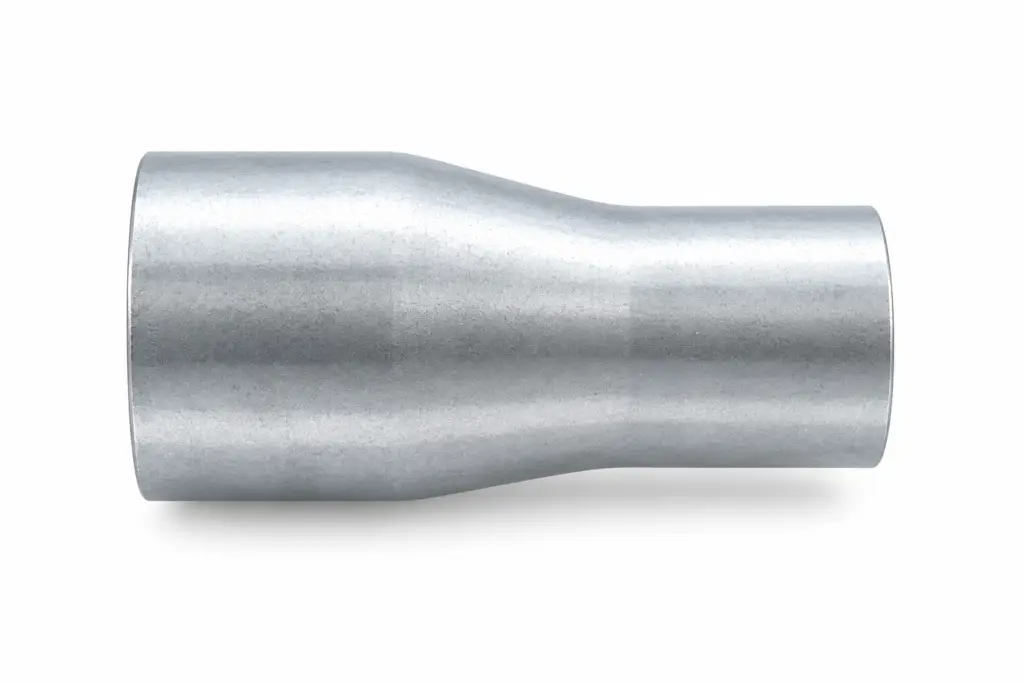
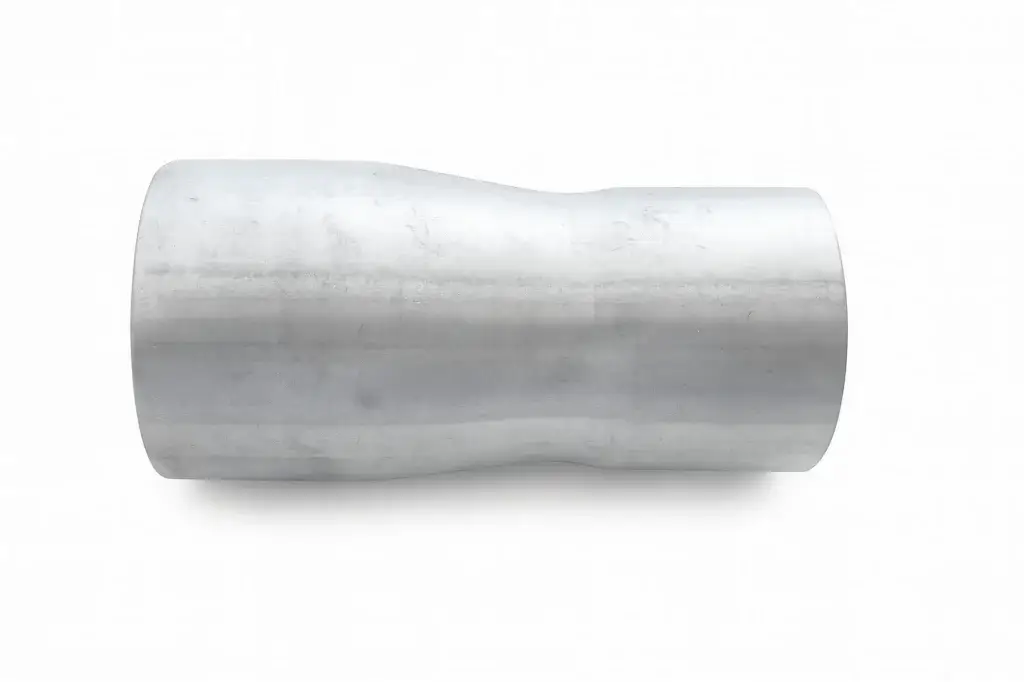
Industrial vacuum reducers are used to transition between different tubing diameters in central vacuum systems. Properly sized reducers help connect main lines, branches and equipment while supporting consistent airflow throughout the piping network.
Vacuum reducers are used in pneumatic conveying systems where pipe or tubing diameters must change between system components. Smooth reducer transitions help maintain airflow and support reliable movement of powders, pellets and other dry bulk materials.
Industrial vacuum reducers help connect different duct or tubing sizes within dust collection systems. They are commonly used between pickup points, branch lines and collection equipment where a controlled diameter transition is required.
Vacuum reducers support material handling systems by connecting different tubing sizes between equipment, transfer lines and collection points. Reducer size, material and connection style should match the conveyed product and system requirements.
Available Materials & Sizes for Industrial Vacuum ReducersDurable carbon steel reducers are used in industrial vacuum, dust collection, pneumatic conveying and material handling systems where strong tubing transitions are required.
Galvanized steel reducers provide added corrosion protection for industrial vacuum and conveying systems while connecting different tubing diameters within the same piping layout.
Lightweight aluminum reducers provide smooth tubing transitions while helping reduce installation weight in industrial vacuum, pneumatic conveying and material handling systems.
Corrosion-resistant 304 stainless steel reducers are suited for demanding environments, food processing and specialized conveying applications requiring durable tubing transitions.
Industrial vacuum reducers are available in multiple inlet and outlet diameter combinations, wall thicknesses and materials. Availability varies by reducer size, material and connection style, including standard reducers and expanded-end configurations for compatible vacuum tubing systems.
Selecting the right industrial vacuum reducer depends on the tubing diameters being connected, airflow or material flow requirements, available system space and the connection method used throughout the piping system.
Choose a reducer that matches the outside diameters of the tubing or equipment being connected. The inlet and outlet sizes should create the required transition without forcing an improper fit.
Reducer shape and size can affect airflow and conveyed material movement. Smooth transitions are preferred where maintaining efficient flow and minimizing turbulence are important.
Consider where the reducer will be installed and how much space is available. The reducer should fit the piping layout while maintaining proper alignment between connected tubing and equipment.
Select a reducer that is compatible with the system's joining method, including compression couplings, slip couplings, shrink sleeves or expanded-end connections.
Industrial vacuum tubing provides the straight piping sections used to connect reducers, elbows, branches and other components throughout vacuum and pneumatic conveying systems.
Industrial vacuum elbows and bends change piping direction and work with reducers to connect different tubing sizes while helping maintain airflow through central vacuum, dust collection and pneumatic conveying systems.
Male and female adapters connect industrial vacuum tubing and reducers to threaded pipe, equipment ports and other system components.
Reducers provide smooth transitions between different tubing diameters and help connect varying system sizes throughout industrial piping installations.
Compression couplings provide secure connections between vacuum tubing, reducers and other fittings while allowing components to be installed or serviced without permanent welding.
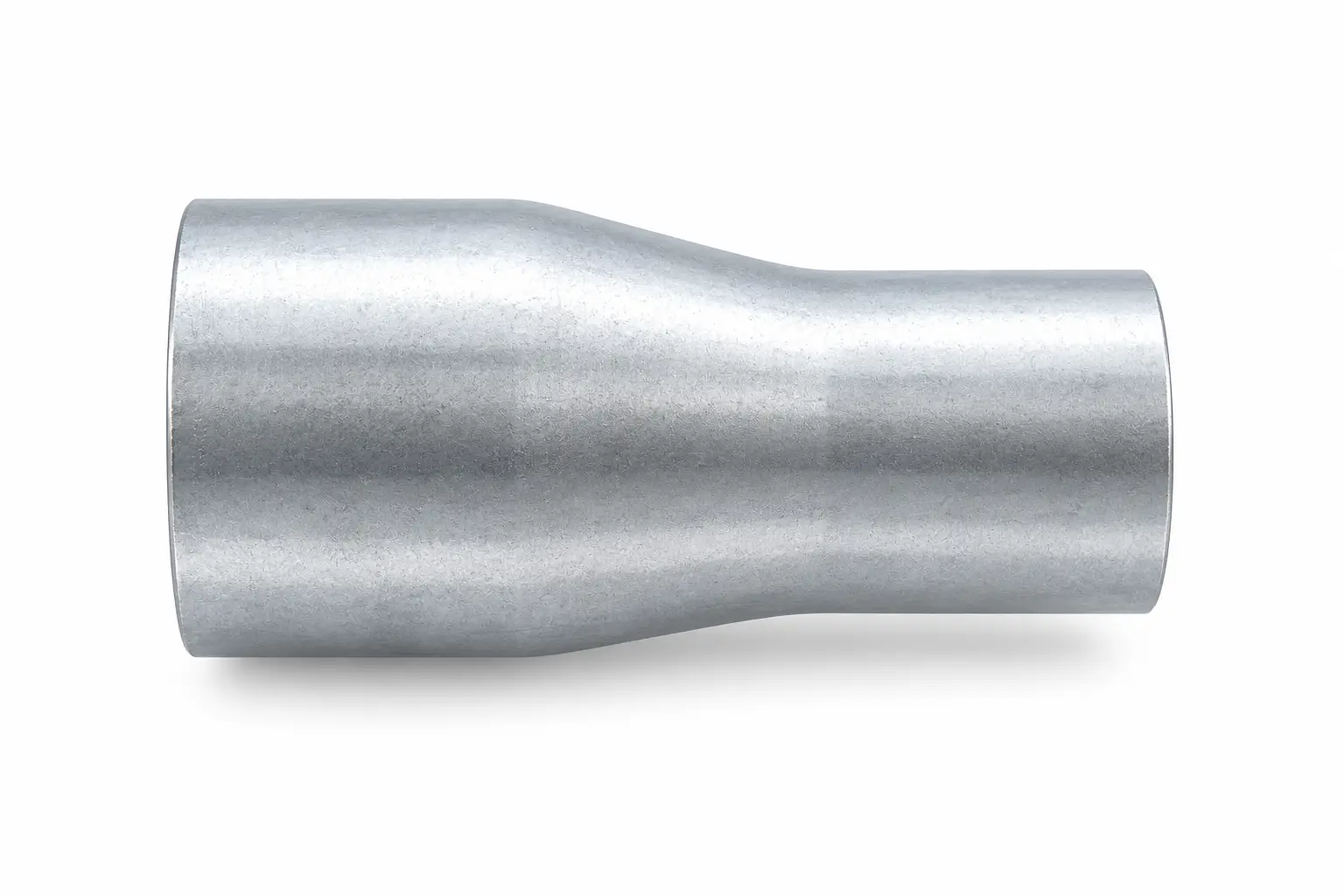
An industrial vacuum reducer is a fitting used to transition between two different tubing or pipe diameters within a central vacuum, dust collection, pneumatic conveying or material handling system.
Industrial vacuum reducers are commonly available in carbon steel, galvanized steel, aluminum and 304 stainless steel. Material availability can vary by reducer size, wall thickness and connection style.
Industrial vacuum reducers are available in multiple inlet and outlet diameter combinations to connect different tubing sizes. Available size combinations vary by material, wall thickness and reducer configuration.
Choose a reducer that matches the outside diameters of the two tubing sections or equipment connections being joined. The reducer should provide the required transition while maintaining proper alignment and system fit.
Yes. Industrial vacuum reducers are commonly used in pneumatic conveying systems where the tubing diameter changes between system components. Smooth reducer transitions help support airflow and reliable movement of powders, pellets and other dry bulk materials.
Industrial vacuum reducers can be connected using compression couplings, slip couplings, shrink sleeves, expanded-end connections and other compatible joining methods depending on the reducer design, tubing size and system requirements.